AI Lip Shape Chart: What Type of Lips Do You Have?
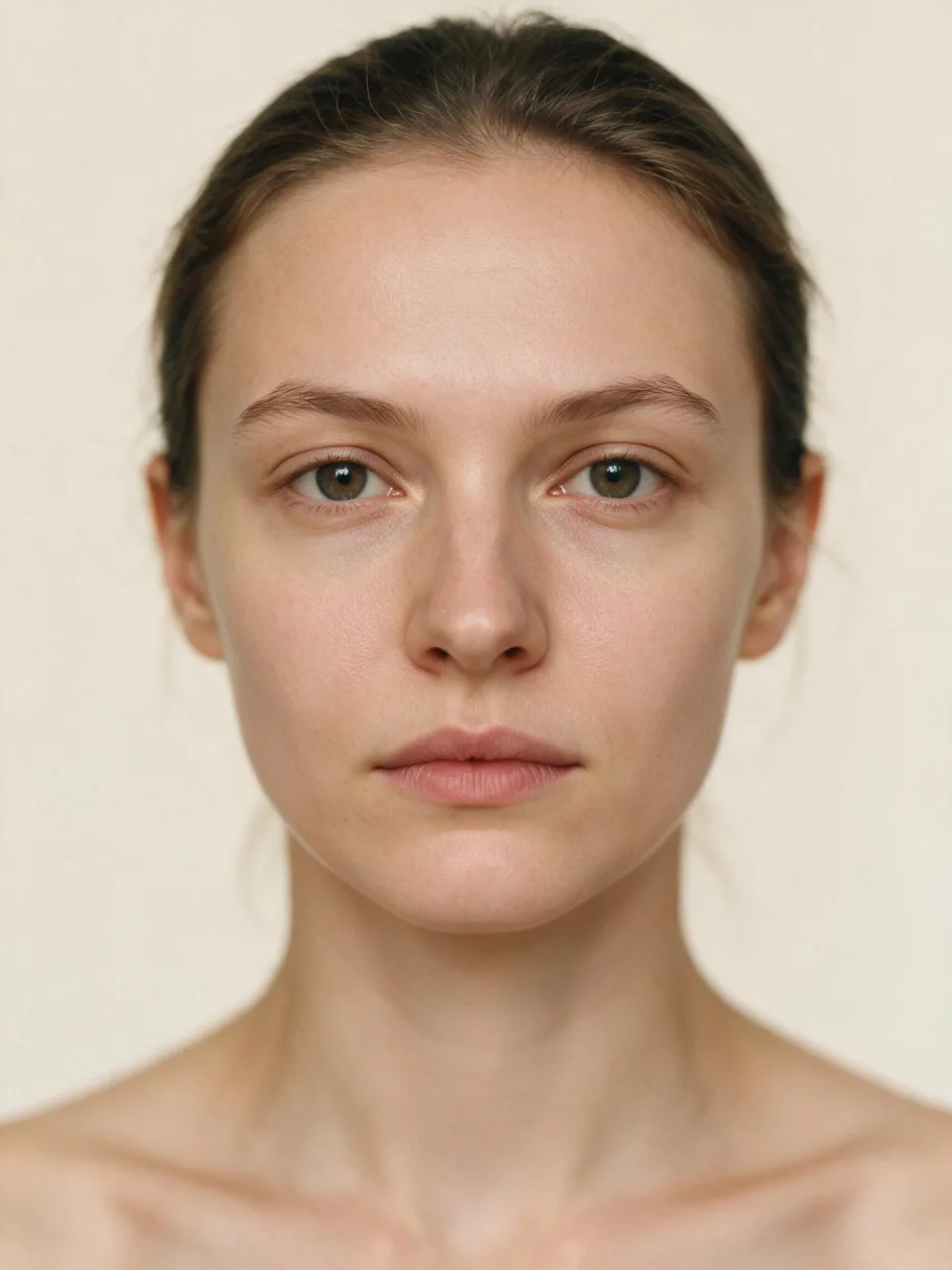
EXAMPLE ANALYSIS: 478 LANDMARKS MAPPED ON A SAMPLE PHOTO, NOT YOURS.
What a reading looks like
Real components · sample dataA starting line, not a verdict.
What we won't show you: a confidence band (not until our test-retest study ships) · a percentile (not until a reference population is published) · a skin score from one photo (lighting lies). Every "not scored" comes with its reason.
Lip type is read from two numbers: the ratio of upper lip height to lower lip height, and total lip height against mouth width. Those numbers separate full, thin, heart-shaped, wide and downturned lips.
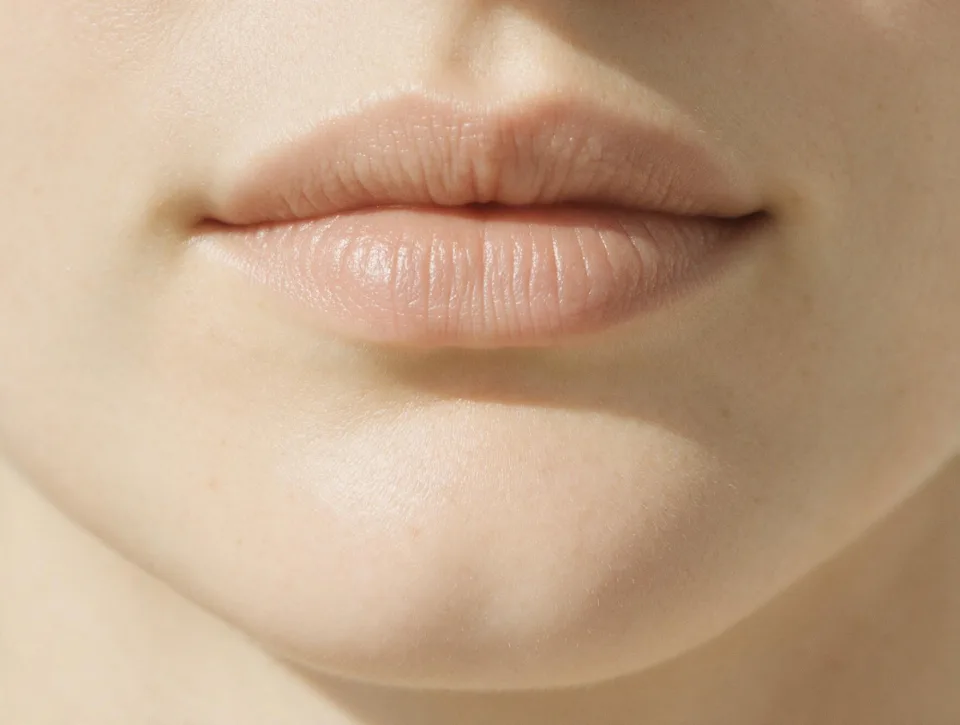
This page is part of our AI facial analysis, and it defines all five lip types by measurement, with a mirror method you can run in two minutes. Your free scan reads 478 landmarks on your device and scores your facial thirds and fifths today; the lip class itself is measured in your Attractiveness Report. A chart row is a description, not a verdict.
The Short Version
The Two Numbers Behind Every Lip Type
Two ratios sort lip types: upper to lower lip height, where published preferences run from 1:1 to 1:2, and total lip height against mouth width, which separates full and wide from thin.
The measured part of a lip is the vermilion, the pigmented area between the skin border and the line where the lips meet. Number one is upper vermilion height against lower, taken at the midline of the closed mouth. Most faces carry a fuller lower lip, and the two studies that asked raters to pick a favourite disagree about how much: one found a 1:2 upper to lower ratio preferred on white women's faces, while the other found 60% of 1,011 respondents across 35 countries choosing 1:1.
Number two is total vermilion height against mouth width, corner to corner. A high value reads full, a low value reads thin or wide, depending on where the width sits. It is also partly an age reading: in 918 people aged 4 to 73, vermilion heights rose until late adolescence and fell steadily after, and the height-to-width ratio ran larger in women than in men.
The Lip Shape Chart: Five Types by Measurement
The chart defines each lip type by what would measure differently, because that is the only kind of definition a photograph can check.
| Lip type | Defining reading | What you see in the mirror | Often confused with |
|---|---|---|---|
| Full | High total lip height against mouth width, with volume in both lips | A broad band of vermilion, top and bottom | Heart-shaped |
| Thin | Low total lip height against mouth width | A narrow band of vermilion, more skin than lip | Wide |
| Heart-shaped | Sharp, high cupid's bow peaks with a fuller middle, the upper lip carrying more height than usual | Two defined points under the philtrum and a soft dip between them | Full |
| Wide | Mouth width high against lip height | A long lip line with modest height | Thin |
| Downturned | Mouth corners sitting below the meeting line of the closed lips | Corners that settle downward at rest | Thin |
One mouth can hold two labels at once, wide and thin most often, and a chart that forces a single row is rounding you to its nearest match. When two rows fit, read the height-to-width number first and the corner line second.
How to Find Your Lip Shape With a Mirror and a Photo
You can find your lip shape from one relaxed photo and two measurements.
- Photograph your closed, relaxed mouth straight on at lens height, no smile, no liner, no filter.
- Measure upper and lower vermilion height at the midline of your mouth and note the ratio.
- Measure total lip height against mouth width, corner to corner: high reads full, low reads thin or wide.
- Check the cupid's bow: two sharp, high peaks over a fuller middle read heart-shaped.
- Lay a horizontal along the meeting line of your lips: corners sitting below it read downturned.
Keep the numbers, not just the label. A second photo can re-run two ratios and settle a disagreement; a label can only argue.
What the Free Scan Measures Around Your Mouth
The free scan measures the proportion grid your lips sit in, and it does not print a lip class. Your mouth sits inside the lower facial third, and the scan scores your facial thirds and fifths along with symmetry across paired mouth-corner landmarks, golden ratio proximity and harmony. Everything runs on your device, and photos never leave your browser. The full face analysis explains the five components in one place, and how we measure, and where the measurement fails holds the conventions.
The classification itself (both ratios measured, resolved into a named type) is in your Attractiveness Report, beside every other measurement and the weight it carries.
What the Evidence Says About Lip Shape and Attractiveness
What the evidence says is smaller and stranger than the marketing: the two strongest preference studies disagree about the ideal ratio. In morphed photographs of 20 white women aged 18 to 25, raters ranked a 1:2 upper to lower ratio most attractive, ranked 2:1 least attractive, and preferred a total lip surface equal to 9.6% of the lower facial third. An international survey then put an adjustable lip in front of 1,011 people across 35 countries, and 60% stopped at 1:1.
Both are studies of edited images, which is the boundary worth remembering: they measure taste in edits, not a verdict on any mouth, and preference moved with the rater's age, country and profession. The filler industry has firm opinions about your lips; the tape measure has fewer.
Can You Change Your Lip Shape?
You cannot change your lip ratios with exercises or products, and the thing that reliably changes them is time: vermilion height falls slowly for everyone from late adolescence onward. Liner and makeup change how the type reads in a photograph, immediately and reversibly, and overlining is exactly that, a change to the read rather than the ratio. Filler and surgical lip procedures move the measurement itself; they are clinical decisions that belong with a qualified practitioner after a consultation, and this page offers no advice about them.
What This Score Cannot Tell You
You Know Your Lip Type: What Next?
Confirm the type before you act on it: one more photo in different light, the same two ratios, and keep the row that survives both. From there the useful moves are adjacent. Your nose shape is read the same way one region up, the jawline rating measures the frame below, and what a 1-10 attractiveness score really means covers what your score means once regions become a number.
Not medical advice. This is a measurement method for a photo, not a diagnosis, a clinical assessment, or a verdict on you.
It measures geometry, not worth. The number tells you where you start. It never tells you what you are.
on every page
of this site
Your report, in full.
- Side profile
- Skin, measured properly
- Averageness
- Dimorphism
- Ranked plan
Paid photo deleted within 24 hours · never used for training
- 40+ measurements, 7 regionsPP. 2-9
- Side profile, from a second photoPP. 10-13
- What moved your score, rankedPP. 14-16
- Four week plan and day 30 re-scanPP. 17-20
Frequently Asked Questions
What type of lips do I have?
You find your lip type from two numbers: upper against lower vermilion height, and total lip height against mouth width. High height reads full, low height reads thin, high width reads wide, sharp cupid's bow peaks read heart-shaped, and corners below the lip line read downturned.
What is the ideal lip ratio?
No single ideal lip ratio exists, because the two strongest studies disagree. Raters preferred 1:2 upper to lower on morphed white female faces in one, while 60% of 1,011 international respondents chose 1:1 in the other. Both measured taste in edited images, not a rule about mouths.
What are heart-shaped lips?
Heart-shaped lips carry sharp, high cupid's bow peaks under the philtrum with a fuller middle, so the closed mouth traces the top of a heart. It is a contour reading rather than a ratio, which is why the mirror check works better than a ruler here.
Are thin lips unattractive?
Thin lips are ordinary variation, and no measurement supports a verdict on them. The preference studies rate edited images of a few faces, and vermilion height falls with age for everyone, so thin is often just later.
Do lips get thinner with age?
Yes. In 918 people aged 4 to 73, vermilion heights rose until late adolescence and then fell steadily, and lip height against mouth width fell with age too. The drift is slow, measured in decades rather than seasons.
Can I change my lip shape without filler?
You can change how your lip type reads, not the ratios themselves: liner and makeup shift every reading on the chart immediately, and wash off. Filler and surgery move the measurement itself and belong with a qualified practitioner, outside this page.
Why are my lips uneven?
Small left-right differences are ordinary, and part of every measured gap is expression and camera angle rather than anatomy. The free scan's symmetry component puts a number on your paired mouth landmarks, so you can measure the gap instead of squinting at it.
Does the free scan tell me my lip shape?
No, and it does not pretend to. The free scan scores symmetry, thirds, fifths, golden ratio proximity and harmony on your device, with nothing uploaded, stored or used for training. The lip classification, both ratios measured, is in your Attractiveness Report.
Is there a lip shape chart with real measurements?
Yes: the chart on this page defines all five types by two ratios you can measure from a photo. Most lip charts online sort by silhouette alone, which is why the same mouth lands in different rows on different charts.
References
Every claim above, traceable
- Popenko et al., JAMA Facial Plastic Surgery 2017 - raters ranked a 1:2 upper to lower lip ratio most attractive and 2:1 least attractive on morphed images of 20 white women, with the preferred lip surface area equal to 9.6% of the lower facial third.
- Heidekrueger et al., Journal of Cranio-Maxillo-Facial Surgery 2017 - 60% of 1,011 respondents across 35 countries chose a 1.0:1.0 upper to lower lip ratio as most attractive on a digitally adjustable female face.
- Sforza et al., Forensic Science International 2010 - across 918 subjects aged 4 to 73, lower and total vermilion heights increased until late adolescence then decreased with age, and the vermilion height to mouth width ratio was larger in women.