Skin quality moves attractiveness ratings strongly. In controlled studies, skin color evenness alone shifted perceived age, health, and attractiveness with face shape held constant. One uncontrolled photo cannot measure skin fairly, so the free scan does not try.
The Short Version
What Skin Quality Means in the Rating Research
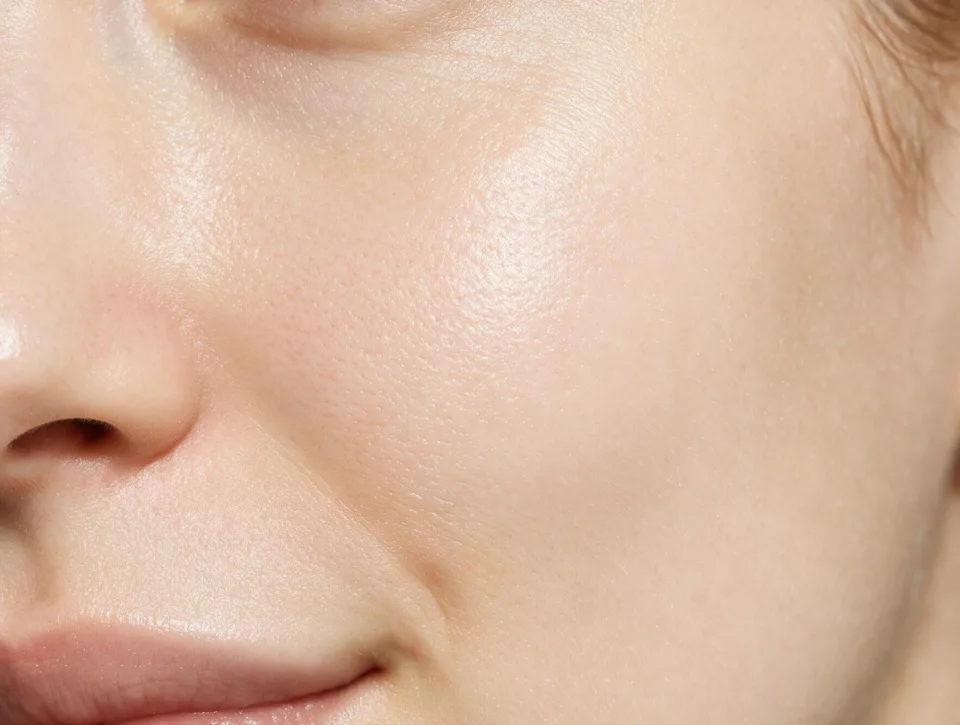
Skin quality, in rating studies, means homogeneity: how evenly color and texture are distributed across facial skin. It is measured from cropped skin patches and standardized faces, not from a glance.
Skin quality, as the rating research defines it, is homogeneity: the evenness of color and texture across the skin of a face. The first direct test found that skin texture played a significant role in judgments of female facial beauty, with even, homogeneous skin rated most attractive [1]. That 2001 study put a number on something portrait retouchers had assumed for a century.
The correlations are large by the standards of facial research. Cropped cheek-skin images from 170 girls and women aged 11 to 76, blind-rated by 353 judges, showed color homogeneity correlating with perceived attractiveness, healthiness, and youthfulness at r above 0.40, and negatively with estimated age [2]. The raters never saw a whole face. The skin patch alone carried that much of the signal.
Skin Alone Can Move a Rating, With Geometry Held Constant
Skin color distribution, by itself, changes how old, healthy, and attractive the same face reads. A 2006 study built shape-standardized 3D faces that varied only in skin color distribution, then had naive judges rate them. Identical geometry wearing the homogeneous color distribution of young skin was rated younger, healthier, and more attractive than the same geometry wearing an older, less even distribution [3]. Facial form was held constant, and skin moved the score anyway.
That result sizes skin against the features people usually ask about first. Symmetry, for comparison, correlates weakly-to-moderately with rated attractiveness across studies, so skin evenness competes with most single measured features and beats several of them. Where skin sits among every other lever, ranked by trial strength, is covered in the full evidence-ranked list of what moves a rating.
Why the Free Scan Will Not Score Skin From One Photo
The free scan does not score skin because one casual photo cannot separate your skin from your camera. Indoor lighting adds a color cast, white balance rewrites it, compression smears fine texture, and many phones smooth and tone-map skin before you ever see the file. Landmark geometry survives that processing; pixel-level skin data does not. We treat a number we cannot defend as a number we do not print, a rule our methodology applies to every score.
So this AI facial analysis sticks to what one photo supports: symmetry, proportion, and harmony from 478 landmarks, measured on your device, where photos never leave your browser. Plenty of beauty apps happily grade skin from a filtered selfie. We would rather explain why that number is fiction.
What Improves Skin Quality: The Evidence, Graded
Four basics carry nearly all the trial evidence for better-reading skin, graded on the same four-tier scale this site uses everywhere: Strong for controlled trials, Moderate for real but smaller or indirect evidence, Weak for mechanism only, and Contested-none where no reliable support exists. The table below is what the evidence says, row by row.
| Intervention | Evidence Grade | What It Changes | How Fast | Citation |
|---|---|---|---|---|
| Daily broad-spectrum sunscreen | Strong | Rate of visible skin aging | Years, compounding | [4] |
| Retinoid most nights | Moderate | Fine lines, tone, texture | 12 to 24 weeks | [5] |
| Sleep, 7 to 9 hours | Strong | Under-eye darkness, dullness | Days | [6] |
| Diet: more fruit and vegetables | Moderate | The golden, healthy color cast | 6 weeks | [7] |
| Drinking extra water | Weak | General skin function only | Not established | No controlled trial |
| Ten-step routines and premium serums | Contested-none | Little beyond the basics above | Not established | No comparable trial |
Sunscreen and a Retinoid
Daily sunscreen holds the single best trial result in this table. A randomized trial assigned 903 adults to daily or discretionary broad-spectrum sunscreen for 4.5 years, and the daily group showed 24 percent less measurable skin aging [4]. For repair rather than prevention, a 2025 network meta-analysis of 23 randomized trials and 3,905 participants ranked tretinoin and retinol among the most effective topicals for fine wrinkles and uneven pigmentation, with tretinoin showing the most favorable safety profile [5]. Give a retinoid 12 to 24 weeks, pair it with morning sunscreen, and skip it entirely if pregnant or breastfeeding.
Sleep and Diet
Sleep is the fastest lever here and the only one tested directly against attractiveness ratings. The same 23 people photographed rested and sleep-deprived were scored less attractive and less healthy in the deprived photos by 65 untrained observers [6]. On the diet side, six weeks of increased fruit and vegetable intake shifted skin color measurably toward the carotenoid cast raters read as healthy, and about three extra daily portions was enough for the change to be perceptible [7].
How Your Attractiveness Report Handles Skin
Skin gets its own chapter in your Attractiveness Report, scored from a controlled photo protocol instead of whatever your last selfie happened to capture: fixed distance and framing, even front-on light, no filters, and the same conditions repeated at the day-30 re-scan. Controlling the capture is what makes skin measurable at all, and it is exactly the control a casual photo lacks. The photo for a paid report uploads over TLS, is deleted within 24 hours, and is never used for training.
What the Skin Research Cannot Tell You
The rating studies carry hard limits, and this page inherits every one of them. Most of the foundational work rated female faces or female skin only, so effect sizes in men are less established [2]. Every study scored photographs rather than faces in motion, and no homogeneity measure predicts how one specific person will judge you, because individual taste stays a large share of every rating. An attractiveness score is a starting line, not a verdict.
Skin conditions are medicine, not aesthetics. Acne, rosacea, eczema, and any sudden pigment change belong with a dermatologist, and nothing on this page is a diagnosis. If checking your skin in photos has started to shape your day, that is worth raising with a professional too, stated plainly and without judgment.
Measure What One Photo Can Actually Measure
The geometric half of a rating is measurable today, free, from one photo. The free attractiveness test scores symmetry, thirds, fifths, golden ratio proximity, and harmony on your device, in seconds. Pair that attractiveness score with the skin evidence above and you are working the two levers this literature grades highest, with a number to check progress against instead of a feeling.
The studies below are the rating research and trials behind every graded claim on this page, numbered in order of first appearance. Where a claim had no verifiable study behind it, the grade says so instead of citing one.
Not medical advice. This page summarizes rating research and skin trials; it is not a diagnosis, and skin conditions belong with a dermatologist.