Cheekbone definition is mostly bone and the fat over it. No exercise builds cheekbones: body-fat level decides how much of the bone shows, contouring redraws it for a day, and age moves the fat underneath on its own schedule.
The Short Version
What Cheekbone Definition Actually Is
Cheekbone definition is set by three tissues: the zygomatic bone, the fat compartments layered over it, and the skin that drapes both. The bone fixes the shape, the fat decides how much of that shape shows, and the light falling across the ridge decides how cleanly the edge reads. There is no muscle to train here at all: the cheek's muscles move the mouth and eyes, and none of them adds height to a bone ridge. The cheekbone-exercise industry trains tissue that cannot produce the result it sells.
Every route below carries one of the same evidence grades this site uses everywhere. Moderate means the effect is real and quantified but comes from smaller or observational work. Styling heuristic means practice supports it, not peer-reviewed research. Contested-none means no reliable evidence supports the claim, and the grade is printed rather than softened.
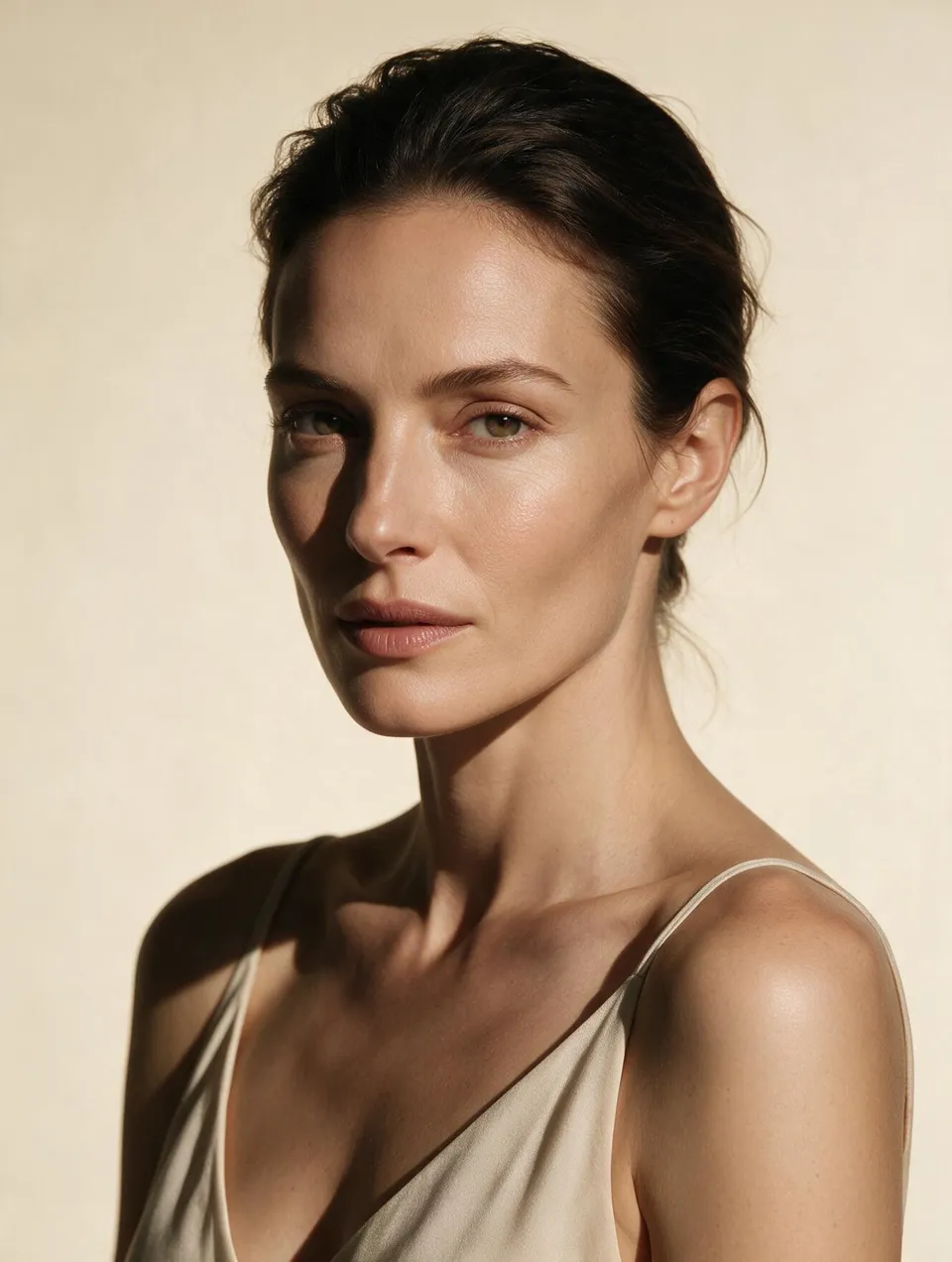
The shadow in this portrait is doing exactly what the section above describes. The zygomatic ridge catches the light and the fat below it holds the shade, so the edge reads cleanly or softly depending on where the lamp sits. Bone and fat set the geometry; light decides how it reads on a given day, which is why every comparison on this page asks for matched conditions.
Every Route, Graded: The Evidence Table
| Route | Evidence Grade | What It Changes | How Fast | Citation |
|---|---|---|---|---|
| Cheekbone and facial exercises | Contested-none | Studied for aging appearance, never for cheekbone definition | Not applicable | [1] |
| Body-fat change | Moderate | The fat layer over the zygomatic ridge | Weeks to months | [2] |
| Contouring makeup | Styling heuristic | The shadow line under the ridge, until it washes off | Minutes | Heuristic, no trial |
| Aging fat migration | Background, not a route | Midface fat position and volume, downward over decades | Decades | [3] |
| Lighting and camera angle | Styling heuristic | How the ridge reads in a photo | Immediate | Heuristic, no trial |
Cheekbone Exercises: Never Tested Against Definition
Cheekbone exercises have never been tested against cheekbone definition, so the only honest grade is Contested-none. The study the facial-exercise industry cites most is a 20-week pilot in middle-aged women, published in JAMA Dermatology, and it measured the appearance of facial aging, not bone or ridge definition [1]. A small pilot on a different question is not evidence for this one. The mechanism argument is worse than the evidence gap: definition is a bone ridge showing through a fat layer, and no repetition of any facial movement removes fat from one spot or adds height to bone. If a cheek routine feels good, nothing here argues against it; this page only refuses to promise it cheekbones.
Body-Fat Change: The One Route That Moves
Body-fat change is the one route on this page with a real mechanism and real evidence, because the malar fat compartments sit directly over the zygomatic ridge. Lower the layer and the same bone shows more cleanly; nothing new is built. The research backs the perceptual half of the claim: facial adiposity, the perception of weight in the face, significantly predicts how healthy and how attractive a face is rated [2]. Grade: Moderate. How fast: weeks to months, and where the face leans out first is genetic, so the timeline is not negotiable by effort alone.
Two boundaries, stated plainly. This applies within a healthy weight range, and a face is never a reason to leave one. If eating and appearance have started steering each other, the National Alliance for Eating Disorders runs a free helpline answered by clinicians, and it takes calls about body image generally. A cheekbone is geometry, not worth.
Contouring: The Same-Day Route
Contouring redraws the shadow under the cheekbone with a darker shade below the ridge and a lighter one on top of it, and it is the only route on this page that works before lunch. The grade is Styling heuristic: no trial measures it, practice supports it, and the effect is exactly as durable as the product. It changes how the ridge reads, not what it is, which also makes it the cheapest way to preview what a leaner or differently lit version of the same face looks like.
Age: The Fat Moves on Its Own
Cheekbones read differently across decades because the fat over them migrates, and this one is measured. A computed tomographic study of the midfacial fat compartments compared younger and older cadaver heads and found an inferior migration of the compartments and an inferior volume shift within them, including volume loss of the deep medial cheek fat [3]. In plain terms: the fat that sits high on the cheek in youth sits lower later, which can make the ridge above it more visible even as the area under it hollows. This is background, not a route. It is listed because most before-and-after cheekbone claims online are really two photos taken a decade apart.
One sentence on the remaining category: implant, filler and buccal-fat procedures exist, and this site does not cover procedures.
How Would You Know It Worked? Measure, Then Re-Measure
You would know it worked by measuring the same face the same way twice. The free face analysis scan reads cheekbone width as one of the four spans it measures, across 478 landmarks, in your browser, and photos never leave your browser. Scan a baseline before you change anything, then re-scan in the same light, at the same distance, with the same expression, or the comparison measures your camera instead of your face. Every measurement is defined in the methodology, and the evidence-ranked version of the whole-face question lives at how to get a prettier face.
A cheekbone span is one component of one measurement, never a verdict on a person. About half of how any single rater judges a face is private taste no measurement reaches, and nothing on this page changes how anyone who already knows you sees you.
Every graded claim above traces to a named, peer-reviewed source below, numbered in order of first appearance. Where a route has no source strong enough to name, this page prints Contested-none instead of borrowing confidence.
Not medical advice. This page grades non-surgical claims by evidence; it is not a diagnosis, a treatment plan, or a substitute for a physician or mental health professional.